

When hurricanes, tropical storms, and unexpected utility outages affect Puerto Rico, access to temporary power can be essential for businesses and critical infrastructure operators. Telecommunications facilities, commercial properties, and emergency response operations may depend on generators to maintain essential functions while utility service is unavailable.
Rapid deployment generators provide flexible temporary power solutions that can be transported to locations where backup electricity is needed.
Planning ahead for generator requirements, delivery logistics, and fuel supply can help organizations prepare for emergencies and minimize operational disruptions.

What Are Rapid Deployment Generators?
Rapid deployment generators are portable or mobile power systems designed to provide temporary electricity when permanent utility power is unavailable or insufficient.
Unlike permanently installed standby generators, mobile systems can be transported between locations based on operational needs.
Common applications include:
- Emergency backup power during utility outages
- Telecommunications and communications infrastructure
- Commercial and industrial facilities
- Disaster response and recovery operations
- Temporary facilities and operational support sites
- Critical infrastructure maintenance
The appropriate generator depends on the facility’s electrical requirements, operating conditions, and expected duration of use.
Why Temporary Power Planning Matters in Puerto Rico
Puerto Rico’s exposure to hurricanes and severe weather creates challenges for organizations that depend on reliable electricity.
Storm-related damage can interrupt utility service, restrict transportation routes, and affect access to critical facilities.
For organizations without sufficient permanent backup power, temporary generator rentals can help support essential operations during restoration efforts.
However, effective generator deployment requires more than equipment availability. Transportation, electrical connections, fuel supply, and ongoing support must also be considered.
Identifying temporary power requirements before an emergency can help organizations coordinate a more effective response.
Temporary Generator Power for Critical Infrastructure
Telecommunications Facilities
Cell towers and communications infrastructure may require temporary power when utility service is interrupted or existing backup systems become unavailable.
Mobile generators can help support communications equipment while restoration activities continue.
Commercial and Industrial Facilities
Warehouses, commercial properties, and industrial operations may need temporary electricity for essential equipment, communications, security systems, and other critical functions.
Facility managers should identify priority electrical loads when determining generator requirements.
Disaster Response Operations
Emergency response teams may use portable generators to support temporary facilities, communications equipment, and operational activities.
Mobile power systems provide flexibility as recovery efforts shift between locations.
Choosing the Right Generator for Emergency Deployment
Several factors should be evaluated when selecting a temporary generator:
- Electrical capacity: Determine the power requirements of essential equipment and systems.
- Voltage compatibility: Ensure the generator is appropriate for the facility’s electrical configuration.
- Fuel requirements: Estimate consumption and determine whether additional fuel deliveries will be necessary.
- Site accessibility: Confirm delivery vehicles and installation equipment can safely reach the location.
- Operating conditions: Consider ventilation, exhaust, weather exposure, and applicable safety requirements.
Qualified electrical professionals should evaluate generator connections and installation requirements.
Generator Delivery and Emergency Logistics
During widespread outages, transporting and positioning generators can become challenging due to road closures, storm debris, and restricted site access.
Organizations can improve preparedness by documenting generator locations, electrical requirements, access instructions, facility contacts, and fuel delivery needs.
For facilities requiring extended generator operation, coordinating equipment deployment with emergency fuel delivery and ongoing maintenance is particularly important.
A complete temporary power plan should address both initial generator deployment and continued operation.
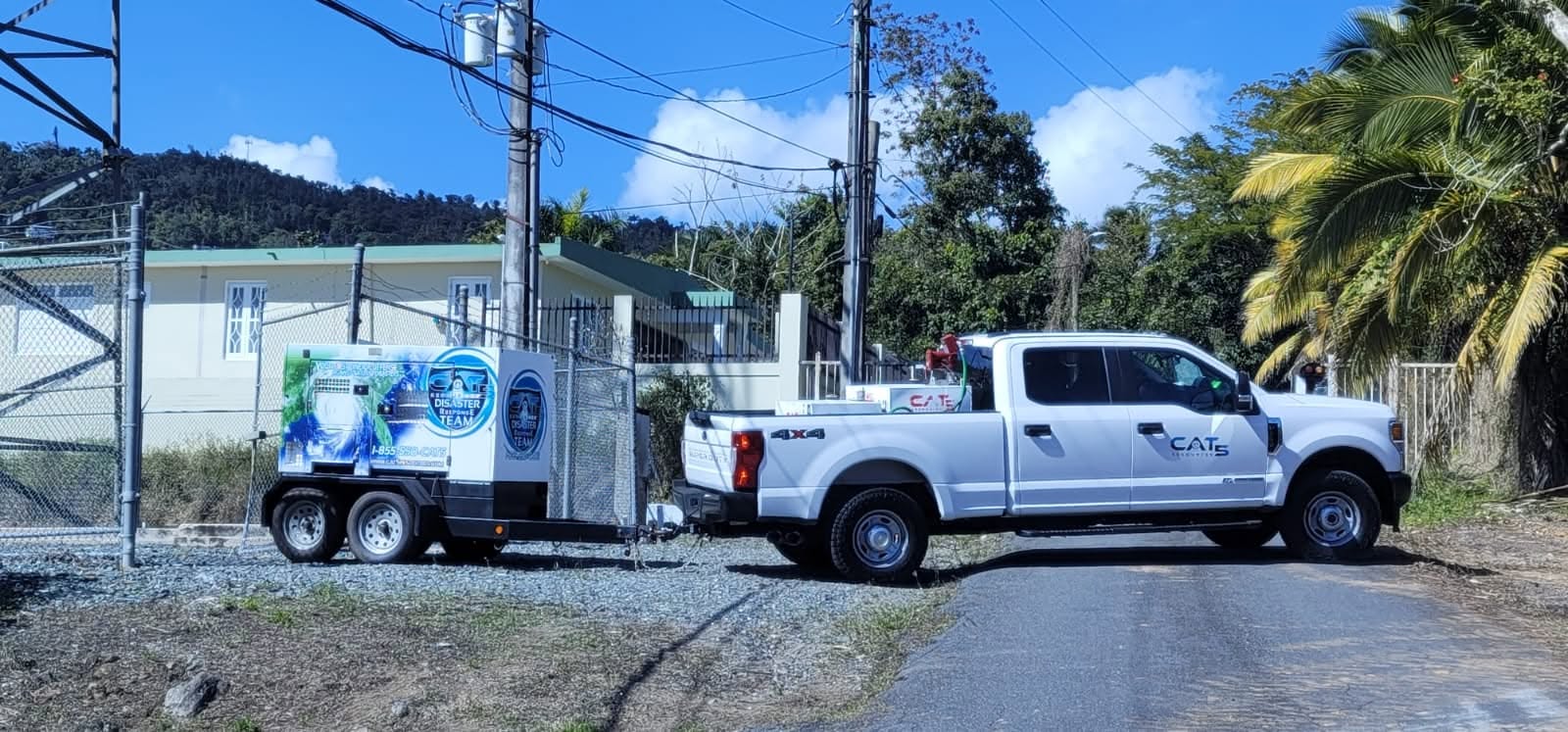
Emergency Power Solutions From Cat5 Resources Caribbean
Cat5 Resources Caribbean supports businesses and critical infrastructure operators throughout Puerto Rico and the U.S. Virgin Islands with emergency power solutions, generator support, and disaster response logistics.
Our services help organizations coordinate temporary power requirements during utility outages, severe weather events, and other operational disruptions.
With experience supporting telecommunications infrastructure and emergency response operations, Cat5 Resources Caribbean understands the logistical challenges associated with deploying and supporting generator equipment in demanding environments.
Prepare Your Temporary Power Strategy
Rapid deployment generators can play an important role in maintaining essential operations when utility power becomes unavailable.
Planning for generator capacity, site access, fuel availability, and equipment support before an outage can help organizations respond more effectively when temporary power is needed.
Contact us to discuss temporary generator power, emergency deployment requirements, and disaster response support throughout Puerto Rico and the U.S. Virgin Islands.