

When hurricanes, tropical storms, or unexpected power outages disrupt operations in Puerto Rico, having access to reliable temporary power can make a significant difference. For commercial businesses and critical infrastructure operators, extended outages can affect equipment, communications, and daily operations.
At Cat5 Resources Caribbean, we understand the importance of maintaining power when the electrical grid becomes unreliable. Our emergency power solutions help businesses prepare for outages and address temporary power needs when unexpected disruptions occur.

What Is Portable Generator Deployment?
Portable generator deployment involves transporting and positioning temporary power equipment at a location where electricity is unavailable or additional power capacity is needed.
For commercial operations, this process involves more than simply delivering a generator. Proper planning requires evaluating electrical demands, equipment placement, fuel availability, and the duration of the anticipated outage.
Our team works with businesses and infrastructure operators to help coordinate temporary power solutions based on their operational requirements.
When Do Businesses Need Temporary Generator Power?
Puerto Rico’s exposure to hurricanes and severe weather makes emergency power planning especially important. However, temporary generators can also support operations during equipment failures, planned maintenance, and unexpected utility interruptions.
Common applications include:
- Telecommunications infrastructure: Supporting cell sites and communications equipment during power interruptions.
- Commercial facilities: Helping maintain essential building operations when utility power is unavailable.
- Industrial operations: Providing temporary power for equipment and critical processes.
- Emergency response: Supporting recovery efforts following hurricanes, tropical storms, and other disruptions.
Having a generator deployment plan in place can help businesses respond more efficiently when electrical service is interrupted.
Planning for Portable Generator Deployment
Successful temporary power deployment begins with understanding the needs of each location.
At Cat5 Resources Caribbean, we recognize that commercial facilities have different power requirements. Generator capacity, accessibility, fuel consumption, and operating conditions all influence the equipment and coordination needed.
Important considerations include:
Power requirements: Identifying essential equipment and determining the electrical capacity needed to support operations.
Site accessibility: Evaluating where generators can be safely positioned and how equipment can reach the location.
Fuel management: Planning for adequate fuel availability, particularly during extended outages or severe weather events.
Deployment coordination: Establishing a response plan before an emergency helps reduce uncertainty when temporary power is needed.
These considerations are especially important for businesses managing multiple facilities or infrastructure locations throughout Puerto Rico.
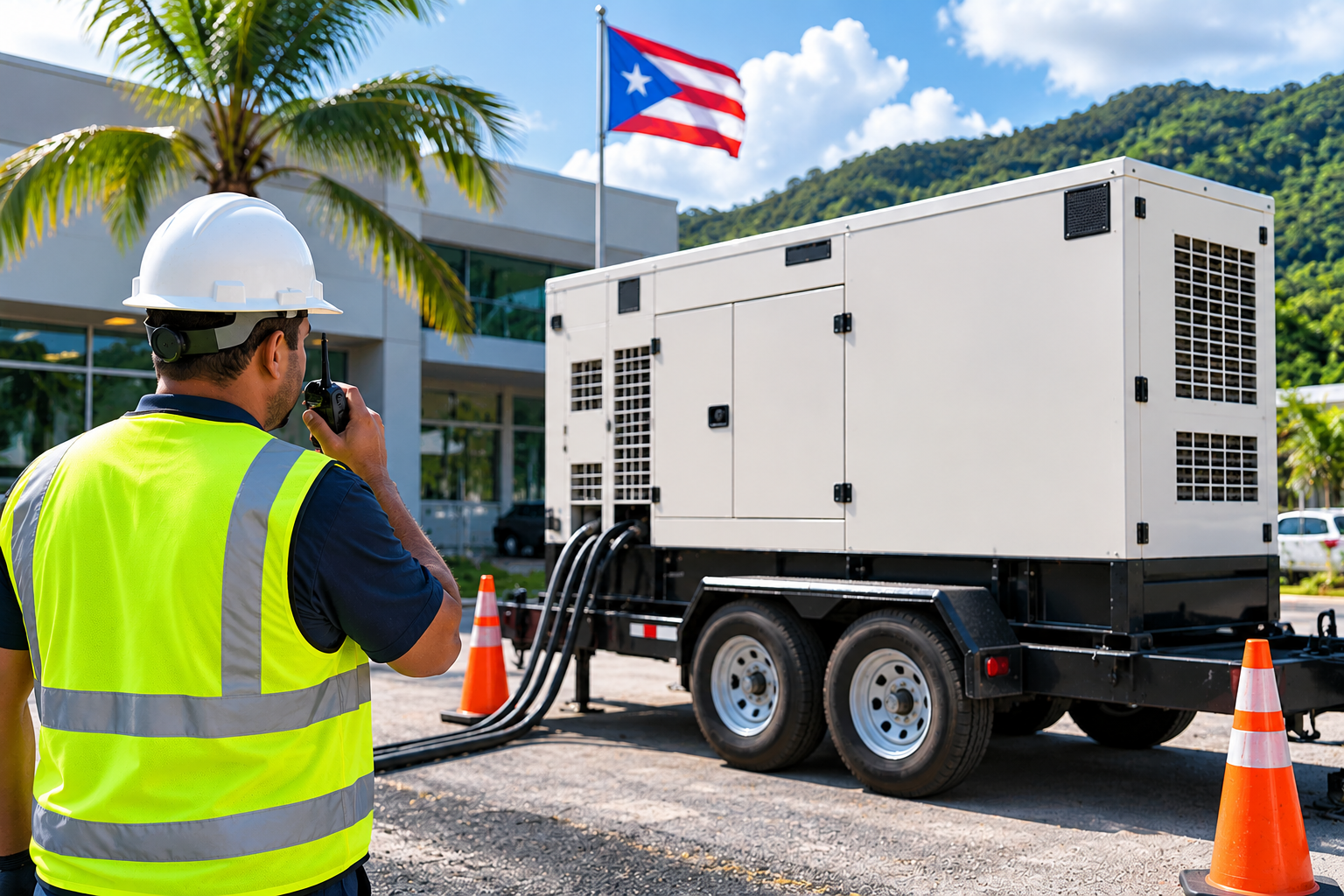
Supporting Business Continuity During Power Outages
Emergency generators provide an important layer of preparedness, but maintaining operations also requires planning for equipment availability, deployment logistics, and ongoing fuel needs.
We work to help commercial customers address these challenges through our broader emergency power and infrastructure support services.
By preparing before hurricane season and evaluating temporary power requirements in advance, businesses can be better positioned to respond when outages occur.
Need Temporary Generator Power in Puerto Rico?
At Cat5 Resources Caribbean, we’re here to help businesses and critical infrastructure operators prepare for unexpected power disruptions. Whether you’re planning ahead for hurricane season or evaluating temporary power options for your facility, our team can help you explore solutions that fit your operational needs.
Contact Cat5 Resources Caribbean today to discuss your portable generator deployment and emergency power requirements in Puerto Rico.